Stomach Cancer Symptoms, Risk Factors, and Treatment Options
Comprehensive guide to stomach cancer symptoms, causes, and treatment, plus how Kolkata Oncology approaches gastric cancer treatment.

October 26, 2026
Patients say it all the time: just gas or acidity. Sometimes it's a stubborn ulcer that antacids should have cleared up weeks ago. And most of the time, that's exactly what it turns out to be. But every so often, the story ends differently, and the person sitting across the desk has been carrying stomach cancer for months without knowing it, simply because the early signs look almost identical to something completely harmless.
That's the frustrating thing about this disease. It doesn't announce itself. So this piece is less about scaring anyone and more about laying out the stomach cancer symptoms actually worth paying attention to, what raises the risk, and what stomach cancer treatment looks like if it ever comes to that.
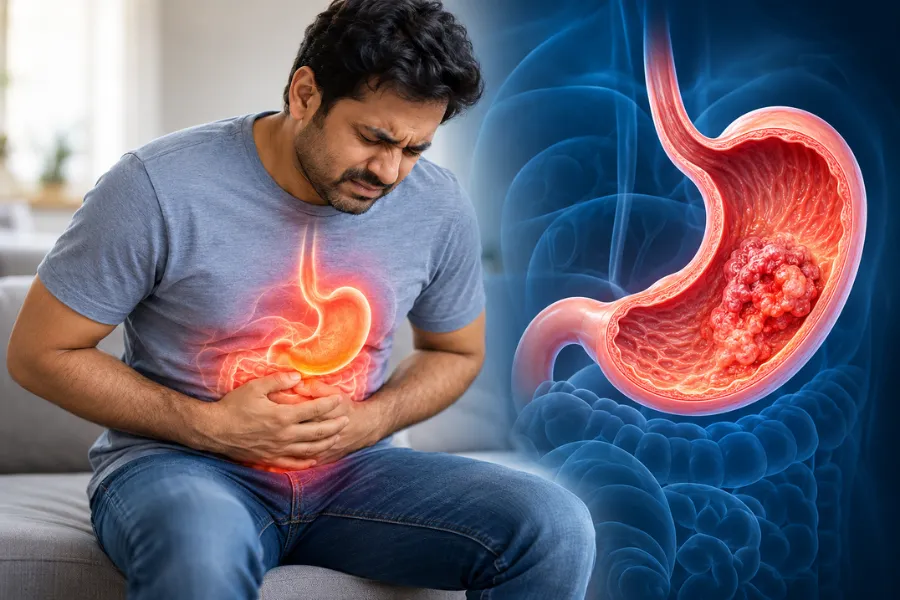
In simple terms, it starts in the lining of the stomach. Cells there develop damage, start dividing when they shouldn't, and slowly form a tumor. "Slowly" is the operative word; this usually takes years to develop, not weeks. Which is actually the one piece of good news in all of this: there's a real window to catch it early, if you know what you're looking for.
It's also worth knowing that gastric cancer, as doctors call it, shows up more often in certain parts of the world, including much of Asia. That's part of why we felt it was worth writing about specifically for readers here in Kolkata.
The tricky part is that early on, stomach cancer feels a lot like everyday digestive trouble, which is exactly why it gets waved off. Later on, the signs are much harder to ignore.
| Stage | What you might notice |
|---|---|
| Early | Bloating or fullness after small meals, mild indigestion or heartburn, reduced appetite, occasional nausea, frequent burping, vague upper-abdomen discomfort |
| Advanced | Unexplained weight loss, difficulty swallowing, vomiting (sometimes with blood), black or tarry stools, persistent fatigue, yellowing of skin or eyes, swelling in the abdomen |
None of the early symptoms scream cancer, and to be fair, they usually aren't. Gastritis, ulcers, and plain acid reflux cause the same complaints far more often. The rule of thumb worth remembering: if something like this sticks around for two or three weeks despite the usual remedies, it's worth an actual check-up rather than another round of antacids.
.webp)
If you're seeing anything in the "advanced" column above—weight loss you can't explain, trouble swallowing, blood in vomit or stool—don't wait to see how it goes. Get it looked at.
There's rarely a single cause behind stomach cancer. It's usually a mix of things stacking up over time, some within your control, some not.
Age is one you can't do much about. Roughly two-thirds of cases happen in people 65 and older. Men are more likely to get it than women. A family history matters too, and there are a handful of inherited genetic conditions, Lynch syndrome and hereditary diffuse gastric cancer among them, that push the risk noticeably higher.
H. pylori infection sits at the top of that list by a wide margin. It's a bacterium that quietly infects the stomach lining, and over years of low-grade inflammation it can push cells toward becoming precancerous. The reassuring part is that it's easy to test for: a simple breath, stool, or blood test does it, and a short course of antibiotics usually clears it.
Diet plays a role as well, particularly food that's heavily salted, smoked, or pickled. We'll be direct about this one: given how common shutki and various pickled preparations are in Bengali households, it's worth being a little mindful of how often these show up on your plate. Not eliminating them, just not making them a daily habit. Smoking roughly doubles your risk. Heavy drinking, carrying extra weight, and long-standing gastritis or ulcers all add to the picture too.
None of this means having a risk factor guarantees anything. It just means it's worth having a real conversation with a doctor about screening, especially past 50 or with a family history in the mix.
Usually the first step is an endoscopy, a thin camera passed down into the stomach so a doctor can see the lining directly and take a small tissue sample if anything looks off. From there, scans like a CT or an endoscopic ultrasound help figure out how far things have spread, which is really what decides everything about the treatment plan that follows.
There's no single playbook here; it depends heavily on the stage, exactly where the tumor sits, and the patient's overall health. But broadly, here's what's usually on the table.
Surgery tends to be the backbone of treatment for early and locally advanced cases, sometimes removing just part of the stomach, sometimes the whole thing when needed. Chemotherapy often comes in either before surgery to shrink the tumor first, or afterward to mop up anything left behind, and it's also used on its own for more advanced disease. Radiation is frequently paired alongside chemo, particularly when a tumor is difficult to remove cleanly through surgery.
Some stomach cancers carry extra HER2 protein on their surface, and when that's the case, targeted drugs can go after those cells specifically; this has gotten considerably more refined in recent years. Immunotherapy is also playing a bigger role now, especially for advanced cases, essentially helping the body's own immune system recognise and fight the cancer more effectively.
.webp)
None of this happens with just one doctor, either. It's usually a team: a surgeon, a medical oncologist, a radiation oncologist, a gastroenterologist, all working together to build something specific to that one patient.
If there's one thing worth repeating from everything above, it's this: outcomes come down almost entirely to timing. Cancer caught before it spreads beyond the stomach wall has a far better outlook than cancer discovered after it's already moved elsewhere. That gap in outcomes is the entire reason this article exists, not to worry anyone unnecessarily, but to nudge people toward getting checked by a stomach cancer specialist in Kolkata instead of waiting it out.
If you've had digestive symptoms hanging around longer than they should, unexplained weight loss, or you recognise yourself in a few of the risk factors above, it's worth coming in for a proper look rather than guessing. At Kolkata Oncology, we handle the full path, diagnosis, staging, and gastric cancer treatment in Kolkata, from endoscopy through surgery, chemotherapy, and the newer targeted and immunotherapy options.
Early really does change everything here. If something has felt wrong for a few weeks now, that's reason enough to come in.
Q: How long does stomach cancer treatment take?
A: Honestly, it depends on the stage. Treatment for stomach cancer can run anywhere from a few months to over a year, factoring in surgery, chemo, and recovery time.
Q: What are 7 warning signs of stomach cancer?
A: Watch for bloating, unexplained weight loss, trouble swallowing, nausea, low appetite, vomiting blood, and black stools. These stomach cancer symptoms are easy to miss, so don't ignore them.
Q: How to stop bleeding from stomach cancer?
A: This isn't something to handle at home. Bleeding from stomach cancer needs immediate medical attention. Doctors may use endoscopy, medication, or surgery, so get to a hospital fast.
Q: What happens when your stomach is removed due to cancer?
A: Life changes, but people adapt. After a gastrectomy, meals get smaller and more frequent, nutrient absorption shifts, and supplements often become part of the daily routine going forward.
Q: How long do people live with stomach cancer without treatment?
A: Without stomach cancer treatment, the outlook is tough, often just months, since the disease tends to progress fast once it's already causing noticeable symptoms.
Lorem ipsum dolor sit amet, consectetur adipiscing elit. Nunc non ligula et tortor pharetra convallis ac in metus.
Comprehensive guide to stomach cancer symptoms, causes, and treatment, plus how Kolkata Oncology approaches gastric cancer treatment.
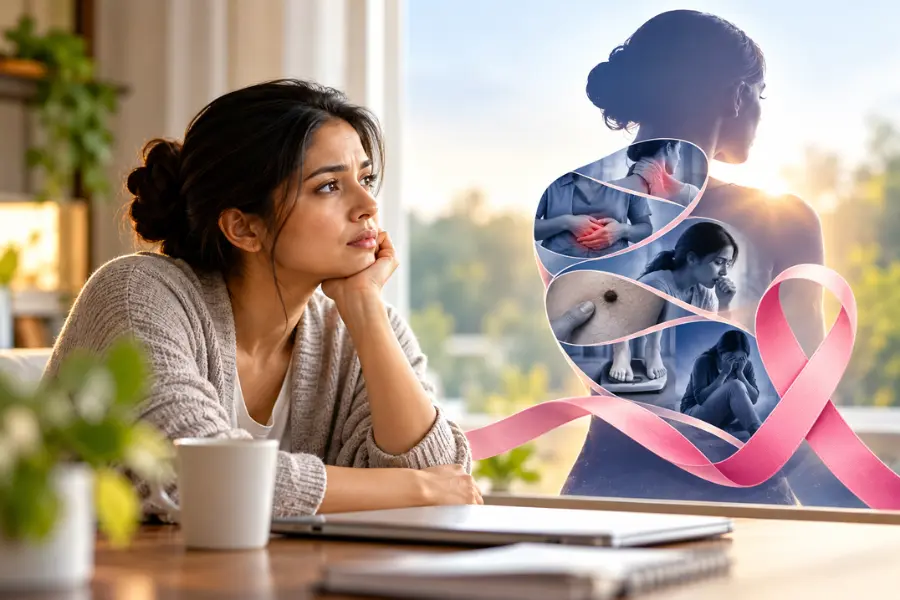
Cancer symptoms often mimic ordinary illnesses, making them easy to dismiss. Learn the 10 subtle warning signs—like persistent fatigue, unexplained weight loss, and recurring pain—that deserve a doctor's attention.

Learn the early warning signs of soft tissue sarcoma and when to seek medical attention. Explore diagnosis and soft tissue sarcoma treatment in Kolkata.
This blog discusses key questions that you must ask your thoracic cancer surgeon in Kolkata to ensure that you choose the right specialist and understand your treatment options.
.webp)
Ovarian cancer is known as the silent killer because its symptoms are often overlooked. This blog is a comprehensive list of 10 warning signs women should never ignore. The risk factors, diagnosis, treatment options, and FAQs related to Ovarian Cancer are included in this blog.

Learn about common breast lump causes, breast cancer symptoms, importance of biopsies, benign breast lumps, and when to consult a breast cancer specialist for timely diagnosis and treatment.

If you are in search of the best oncologist in Kolkata,this blog will help you in evaluating this difficult decision on the basis of doctor expertise, patient reviews and advanced surgical precision.

When selecting the best cancer doctor in Kolkata, patient reviews and success rates reveal the real story behind popular doctors in the city. In this blog, Kolkata Oncology talks about transparency and accessibility in patient reviews for deciding on a suitable cancer doctor in Kolkata.

From early diagnosis to advanced treatment, this blog is comprehensive information on breast cancer, surgical procedures, best breast cancer surgeon in Kolkata Dr. Shaikat Gupta and general preventive awareness.
.webp)
Best Surgical Oncologist in Kolkata: Discover the expertise, advanced treatment approaches, and compassionate care that help deliver improved cancer treatment outcomes.

World Cancer Day emphasizes cancer awareness, early detection and expert surgical treatment in Kolkata for improved survival and quality care.

Dr. Shaikat Gupta, best oncology surgeon in Eastern India, pioneers bloodless cancer surgery for breast, abdominal & thoracic tumors.